4.12 使用 Cluster Launch Control 进行工作窃取(Work Stealing with Cluster Launch Control)
处理数据量和计算量可变的问题,是开发 CUDA 应用时的一个重要环节。传统上,CUDA 开发者主要使用两种方式确定要启动的 kernel thread block 数量:每个 thread block 固定工作量,以及固定 thread block 数量。两种方法各有优缺点。
每个 Thread Block 固定工作量(Fixed Work per Thread Block):根据问题规模决定 thread block 数量,同时保持每个 thread block 执行的工作量不变。
这种方法的主要优点是:
SM 之间的负载均衡
当 thread block 的运行时间存在差异,或者 thread block 数远多于 GPU 可同时执行的数量(因此产生低尾效应)时,GPU 调度器可以让某些 SM 比其他 SM 多运行一些 thread block。
抢占(Preemption)
即使较低优先级 kernel 已经开始执行,GPU 调度器也可以在它之后启动较高优先级 kernel:当低优先级 kernel 的 thread block 完成时,将高优先级 kernel 的 thread block 调度上去。高优先级 kernel 执行完毕后,调度器可以继续执行低优先级 kernel。
固定 Thread Block 数量(Fixed Number of Thread Blocks):通常通过 block-stride loop 或 grid-stride loop 实现,thread block 数量不依赖问题规模,而每个 thread block 执行的工作量随问题规模变化。通常根据执行该 kernel 的 GPU 上的 SM 数量和期望占用率决定 thread block 数量。
这种方法的主要优点是:
降低 Thread Block 开销
这种方法不仅降低摊销后的 thread block 启动延迟,还能减少所有 thread block 之间共享操作带来的计算开销。这些开销可能显著高于启动延迟开销。
例如在卷积 kernel 中,可以因为 thread block index 与计算卷积系数无关,而通过固定 thread block 数量减少计算卷积系数的序言执行次数,从而减少重复计算。
Cluster Launch Control 是 NVIDIA Blackwell GPU 架构(计算能力 10.0)引入的功能,旨在结合前两种方法的优点。它允许开发者取消 thread block 或 thread block cluster,从而更精细地控制 thread block 调度。这一机制实现了工作窃取:工作窃取是并行计算中的动态负载均衡技术,空闲处理器会主动从繁忙处理器的工作队列中“窃取”任务,而不是等待任务被分配。
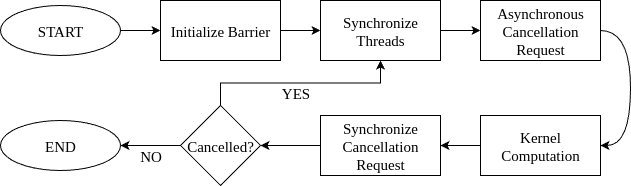
图 54:Cluster Launch Control 流程。该图展示 thread block 发起取消请求、请求成功后接管被取消 block 的索引并处理工作,以及请求失败后继续处理当前 block 的执行流程。
使用 Cluster Launch Control 时,一个 thread block 会尝试取消另一个尚未开始执行的 thread block 的启动。如果取消请求成功,它会使用另一个 thread block 的索引来执行该任务,从而“窃取”其工作。如果没有更多可用的 thread block index,或者发生其他原因(例如调度了更高优先级的 kernel),取消就会失败。后一种情况下,如果 thread block 在取消失败后退出,调度器可以启动高优先级 kernel;高优先级 kernel 执行完后,调度器会继续调度当前 kernel 的剩余 thread block。上图展示了这一过程的执行流程。
下表总结三种方法的优点和缺点:
| 每个 Thread Block 固定工作量 | 固定 Thread Block 数量 | Cluster Launch Control | |
|---|---|---|---|
| 降低开销 | 否 | 是 | 是 |
| 抢占 | 是 | 否 | 是 |
| 负载均衡 | 是 | 否 | 是 |
4.12.1 API 详情(API Details)
通过 Cluster Launch Control API 取消 thread block 是异步执行的,并使用共享内存 barrier 进行同步,其编程模式类似于异步数据复制。
该 API 通过 libcu++ 提供,包含:
- 请求指令:将编码后的取消结果写入
__shared__变量。 - 解码指令:提取成功/失败状态以及被取消的 thread block index。
请注意,Cluster Launch Control 操作被建模为 async proxy 操作。
4.12.1.1 Thread Block 取消(Thread Block Cancellation)
使用 Cluster Launch Control 的首选方式是由单个线程使用,即一次只发起一个请求。
取消过程包含五个步骤:
- 设置阶段(步骤 1–2):声明并初始化取消结果和同步变量。
- 工作窃取循环(步骤 3–5):重复执行请求、同步以及处理取消结果。
声明 thread block 取消所需的变量:
__shared__ uint4 result; // 请求结果
__shared__ uint64_t bar; // 同步 barrier
int phase = 0;           // 同步 barrier 阶段
使用单个到达计数初始化共享内存 barrier:
if (cg::thread_block::thread_rank() == 0)
    ptx::mbarrier_init(&bar, 1);
__syncthreads();
由单个线程提交异步取消请求,并设置事务计数:
if (cg::thread_block::thread_rank() == 0) {
    cg::invoke_one(cg::coalesced_threads(), [&](){ptx::clusterlaunchcontrol_try_cancel(&result, &bar);});
    ptx::mbarrier_arrive_expect_tx(ptx::sem_relaxed, ptx::scope_cta, ptx::space_shared, &bar, sizeof(uint4));
}
注
由于 thread block 取消是 uniform instruction,建议在
invoke_one线程选择器中提交它。这样编译器可以优化掉 peeling loop。同步并完成异步取消请求:
while (!ptx::mbarrier_try_wait_parity(&bar, phase))
{}
phase ^= 1;
获取取消状态和被取消的 thread block index:
bool success = ptx::clusterlaunchcontrol_query_cancel_is_canceled(result);
if (success) {
    // 对于一维/二维 thread block,不需要以下三个值全部存在:
    int bx = ptx::clusterlaunchcontrol_query_cancel_get_first_ctaid_x(result);
    int by = ptx::clusterlaunchcontrol_query_cancel_get_first_ctaid_y(result);
    int bz = ptx::clusterlaunchcontrol_query_cancel_get_first_ctaid_z(result);
}
确保 async proxy 与 generic proxy 之间的共享内存操作可见,并防止工作窃取循环不同迭代之间的数据竞争。
4.12.1.2 Thread Block 取消的约束(Constraints on Thread Block Cancellation)
这些约束与取消请求失败有关:
观察到之前失败的请求后,再提交另一个取消请求属于未定义行为。
在下面两个代码示例中,假设第一次取消请求失败,只有第一个示例表现出未定义行为。第二个示例在两个取消请求之间没有进行观察,因此是正确的。
无效代码:
// 第一个请求:
ptx::clusterlaunchcontrol_try_cancel(&result0, &bar0);

// 查询第一个请求:
[此处为同步 bar0 的代码]
bool success0 = ptx::clusterlaunchcontrol_query_cancel_is_canceled(result0);
assert(!success0); // 已观察到失败;第二个取消请求无效

// 第二个请求 - 下一行属于未定义行为:
ptx::clusterlaunchcontrol_try_cancel(&result1, &bar1);
有效代码:
// 第一个请求:
ptx::clusterlaunchcontrol_try_cancel(&result0, &bar0);

// 第二个请求:
ptx::clusterlaunchcontrol_try_cancel(&result1, &bar1);

// 查询第一个请求:
[此处为同步 bar0 的代码]
bool success0 = ptx::clusterlaunchcontrol_query_cancel_is_canceled(result0);
assert(!success0); // 已观察到失败;第二个取消请求有效
获取失败取消请求的 thread block index 属于未定义行为。
不建议由多个线程提交取消请求。这样会取消多个 thread block,并需要谨慎处理,例如:
- 每个提交线程必须提供唯一的
__shared__result 指针,以避免数据竞争。 - 如果使用同一个 barrier 进行同步,则必须相应调整到达计数和事务计数。
- 每个提交线程必须提供唯一的
4.12.2 示例:向量-标量乘法(Example: Vector-Scalar Multiplication)
下面的小节通过向量-标量乘法 kernel 演示使用 Cluster Launch Control 进行工作窃取。我们展示同一问题的两个变体:一个使用 thread block,另一个使用 thread block cluster。
4.12.2.1 用例:Thread Block(Use-case: Thread Blocks)
下面三个 kernel 分别展示每个 thread block 固定工作量、固定 thread block 数量以及 Cluster Launch Control 三种方法,用于实现向量-标量乘法 $\overline{v} := \alpha \overline{v}$。
每个 Thread Block 固定工作量:
__global__
void kernel_fixed_work (float* data, int n)
{
    // Prologue:
    float alpha = compute_scalar();

    // Computation:
    int i = blockIdx.x * blockDim.x + threadIdx.x;
    if (i < n)
        data[i] *= alpha;
}

// Launch: kernel_fixed_work<<<(n + 1023) / 1024, 1024>>>(data, n);
固定 Thread Block 数量:
__global__
void kernel_fixed_blocks (float* data, int n)
{
    // Prologue:
    float alpha = compute_scalar();

    // Computation:
    int i = blockIdx.x * blockDim.x + threadIdx.x;
    while (i < n) {
        data[i] *= alpha;
        i += gridDim.x * blockDim.x;
    }
}

// Launch: kernel_fixed_blocks<<<SM_COUNT, 1024>>>(data, n);
Cluster Launch Control:
#include <cooperative_groups.h>
#include <cuda/ptx>

namespace cg = cooperative_groups;
namespace ptx = cuda::ptx;

__global__
void kernel_cluster_launch_control (float* data, int n)
{
    // Cluster launch control initialization:
    __shared__ uint4 result;
    __shared__ uint64_t bar;
    int phase = 0;

    if (cg::thread_block::thread_rank() == 0)
        ptx::mbarrier_init(&bar, 1);

    // Prologue:
    float alpha = compute_scalar(); // 此代码片段未展示 device function。

    // Work-stealing loop:
    int bx = blockIdx.x; // 假设 thread block 使用一维 x 轴。

    while (true) {
        // 防止下一轮覆盖 result,
        // (也确保第一轮迭代时 barrier 已初始化):
        __syncthreads();

        // Cancellation request:
        if (cg::thread_block::thread_rank() == 0) {
            // 在 async proxy 中获取 result 的写权限:
            ptx::fence_proxy_async_generic_sync_restrict(ptx::sem_acquire, ptx::space_cluster, ptx::scope_cluster);

            cg::invoke_one(cg::coalesced_threads(), [&](){ptx::clusterlaunchcontrol_try_cancel(&result, &bar);});
            ptx::mbarrier_arrive_expect_tx(ptx::sem_relaxed, ptx::scope_cta, ptx::space_shared, &bar, sizeof(uint4));
        }

        // Computation:
        int i = bx * blockDim.x + threadIdx.x;
        if (i < n)
            data[i] *= alpha;

        // Cancellation request synchronization:
        while (!ptx::mbarrier_try_wait_parity(ptx::sem_acquire, ptx::scope_cta, &bar, phase))
        {}
        phase ^= 1;

        // Cancellation request decoding:
        bool success = ptx::clusterlaunchcontrol_query_cancel_is_canceled(result);
        if (!success)
            break;

        bx = ptx::clusterlaunchcontrol_query_cancel_get_first_ctaid_x<int>(result);

        // 在 async proxy 中释放 result 的读权限:
        ptx::fence_proxy_async_generic_sync_restrict(ptx::sem_release, ptx::space_shared, ptx::scope_cluster);
    }
}

// Launch: kernel_cluster_launch_control<<<(n + 1023) / 1024, 1024>>>(data, n);
4.12.2.2 用例:Thread Block Cluster(Use-case: Thread Block Clusters)
对于 thread block cluster,thread block 取消步骤与非 cluster 情况相同,只需要做少量调整。同样,不建议在一个 cluster 内由多个线程提交取消请求,因为这会尝试取消多个 cluster。
- 取消请求由单个 cluster 线程提交。
- 每个 cluster 的每个 thread block 的共享内存 result 都会收到被取消 thread block index 的相同(编码后的)值,也就是 result 会被 multicast。所有 thread block 收到的 result 对应 cluster 内的本地 block index
{0, 0, 0}。因此,cluster 内的 thread block 需要加上各自的本地 block index。 - 每个 cluster 的 thread block 使用本地
__shared__内存 barrier 执行同步。barrier 操作必须使用ptx::scope_cluster作用域。 - 在 cluster 情况下执行取消要求所有 thread block 都已存在。可以通过
cg::cluster_group::sync()(来自syncAPI)保证所有 thread block 都在运行。
下面的 kernel 展示使用 thread block cluster 的 Cluster Launch Control 方法。
#include <cooperative_groups.h>
#include <cuda/ptx>

namespace cg = cooperative_groups;
namespace ptx = cuda::ptx;

__global__ __cluster_dims__(2, 1, 1)
void kernel_cluster_launch_control (float* data, int n)
{
    // Cluster launch control initialization:
    __shared__ uint4 result;
    __shared__ uint64_t bar;
    int phase = 0;

    if (cg::thread_block::thread_rank() == 0) {
        ptx::mbarrier_init(&bar, 1);
        ptx::fence_mbarrier_init(ptx::sem_release, ptx::scope_cluster); // CGA-level fence。
    }

    // Prologue:
    float alpha = compute_scalar(); // 此代码片段未展示 device function。

    // Work-stealing loop:
    int bx = blockIdx.x; // 假设 thread block 使用一维 x 轴。

    while (true) {
        // 防止下一轮覆盖 result,
        // (也确保第一轮迭代时所有 thread block 都已启动):
        cg::cluster_group::sync();

        // 由单个 cluster 线程发起取消请求:
        if (cg::cluster_group::thread_rank() == 0) {
            // 在 async proxy 中获取 result 的写权限:
            ptx::fence_proxy_async_generic_sync_restrict(ptx::sem_acquire, ptx::space_cluster, ptx::scope_cluster);

            cg::invoke_one(cg::coalesced_threads(), [&](){ptx::clusterlaunchcontrol_try_cancel_multicast(&result, &bar);});
        }

        // 每个 thread block 跟踪取消完成状态:
        if (cg::thread_block::thread_rank() == 0)
            ptx::mbarrier_arrive_expect_tx(ptx::sem_relaxed, ptx::scope_cluster, ptx::space_shared, &bar, sizeof(uint4));

        // Computation:
        int i = bx * blockDim.x + threadIdx.x;
        if (i < n)
            data[i] *= alpha;

        // Cancellation request synchronization:
        while (!ptx::mbarrier_try_wait_parity(ptx::sem_acquire, ptx::scope_cluster, &bar, phase))
        {}
        phase ^= 1;

        // Cancellation request decoding:
        bool success = ptx::clusterlaunchcontrol_query_cancel_is_canceled(result);
        if (!success)
            break;

        bx = ptx::clusterlaunchcontrol_query_cancel_get_first_ctaid_x<int>(result);
        bx += cg::cluster_group::block_index().x; // 加上本地偏移量。

        // 在 async proxy 中释放 result 的读权限:
        ptx::fence_proxy_async_generic_sync_restrict(ptx::sem_release, ptx::space_shared, ptx::scope_cluster);
    }
}

// Launch: kernel_cluster_launch_control<<<(n + 1023) / 1024, 1024>>>(data, n);